Set the engineering case
28-day strength target, water/aggregate settings and screening budget

Research prototype
Generate and screen many mix candidates with the same acceptance logic.

Supplied research-workflow diagram; a diagram of the study, not a live application screenshot.
Engineering software / Streamlit
For concrete materials and computational engineers
Generate and screen many mix candidates with the same acceptance logic.
Generate and screen many mix candidates with the same acceptance logic.
28-day strength target, water/aggregate settings and screening budget
Mix candidates with feasibility, domain and uncertainty diagnostics
Choose candidates for review and physical testing.
Flow matching · Python
Credited Stage09 source, inference engine and frozen-bundle documentation.
Implemented research workflow; the public visual is its workflow diagram, not a running application screenshot.
Public deployment has not been verified. The supplied interface and source establish the implementation shown.
Engineering record
Implemented Stage09 research workflow; laboratory qualification and production deployment remain outside the evidence.
A strength target can correspond to many concrete mixtures. The implemented Stage09 research tool generates candidate compositions and screens their predicted response, rather than claiming a unique or laboratory-qualified mix.
The primary target is 28-day compressive strength. The page follows the supplied Streamlit application and engine lineage; it does not merge capabilities from a separate proposed web architecture.
Application source, an inference engine and a frozen-bundle README support an implemented Stage09 workflow. The Stage09 source explicitly credits Sina Sarfarazi as the application developer.
This credit does not imply sole authorship of underlying data or every model component. Deployment instructions do not demonstrate a running public release.
Predict one of 16 ingredient-activity regimes, obtain a conditional compositional centre and use masked residual conditional flow matching for one-to-many candidate generation.
Preserve structural zeros and enforce binder closure in reconstruction. These are representation checks, not proof of fresh or hardened concrete performance.
Random Forest, Extra Trees, HistGradientBoosting and XGBoost models provide strength predictions. Descriptor support and ensemble disagreement are exposed as diagnostics.
Use empirical q80/q90 calibration diagnostics and material-stage GWP/reference-cost Pareto comparisons to inspect retained alternatives.
The supplied README, application and engine define the model-loading, reconstruction, screening and reporting sequence. No live demonstration is linked because a current deployment has not been verified.
The supplied research-workflow diagram appears above. It is not a running Stage09 screenshot.
Scroll the table horizontally to inspect all columns.
| Diagnostic | Supported interpretation | Not established |
|---|---|---|
| q80 / q90 thresholds | Empirical calibration diagnostics | Formal conformal coverage guarantee. |
| Forward strength predictions | Surrogate-based candidate screening | Laboratory validation. |
| Material-stage GWP | Cradle-to-gate comparison using generic literature factors | Complete project LCA or verified carbon reduction. |
| Reference cost | Declared material-cost scenario | Current local quote or life-cycle saving. |
Workability, durability, exposure class, chloride resistance, shrinkage, creep, early-age requirements and code-specific qualification are outside the primary prediction target. These need separate evidence and checks.
Cross-study transfer is harder than pooled in-domain prediction. A new material system may require additional descriptors or local calibration. No generic “accuracy”, compliant mix or delivered field benefit is claimed.
Manuscript metrics are not used as headline results until they are reconciled with the implemented release and evaluation split. Software licensing and public release status also need confirmation before distributing the research source.
Engineering R&D explains how a calculation or screening workflow can be scoped for a new assignment.
Continue exploring

Connect performance screening, candidate comparison and geometry output.
Surrogates · Inverse design
Search from a performance target towards possible parent sections.
Multi-output regression
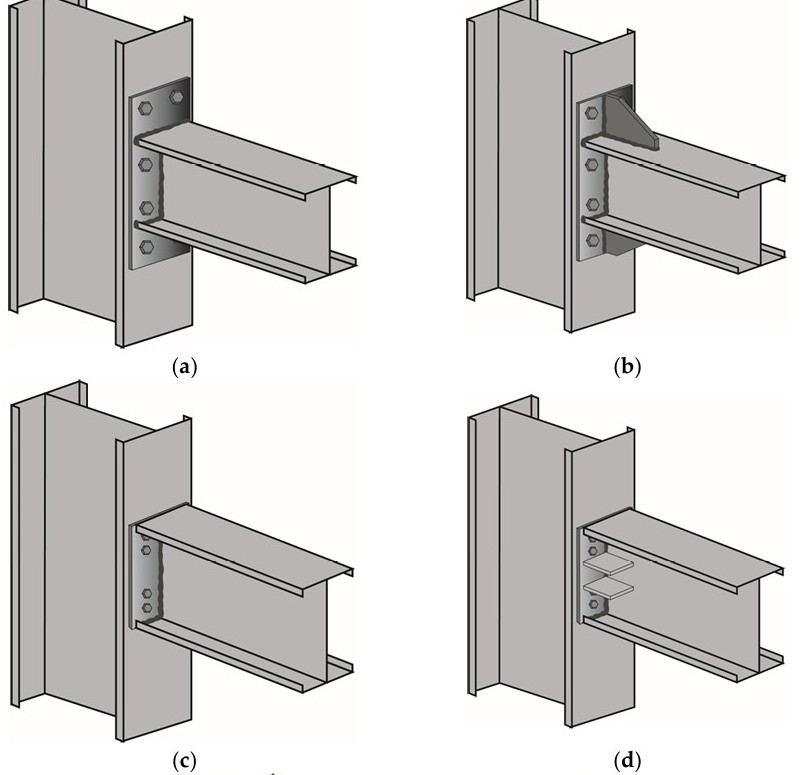
Explain bolted joint response through mechanics and nonlinear FE.
Abaqus · Analytical mechanics
Your next engineering question
An asset to verify. A response to understand.
A workflow to make repeatable.