2023 · Metals
Some Considerations on the Behaviour of Bolted Stainless-Steel Beam-to-Column Connections: A Simplified Analytical Approach
Sina Sarfarazi; Rabee Shamass; Ida Mascolo; Gaetano Della Corte; Federico Guarracino

Published research
Explain bolted joint response through mechanics and nonlinear FE.
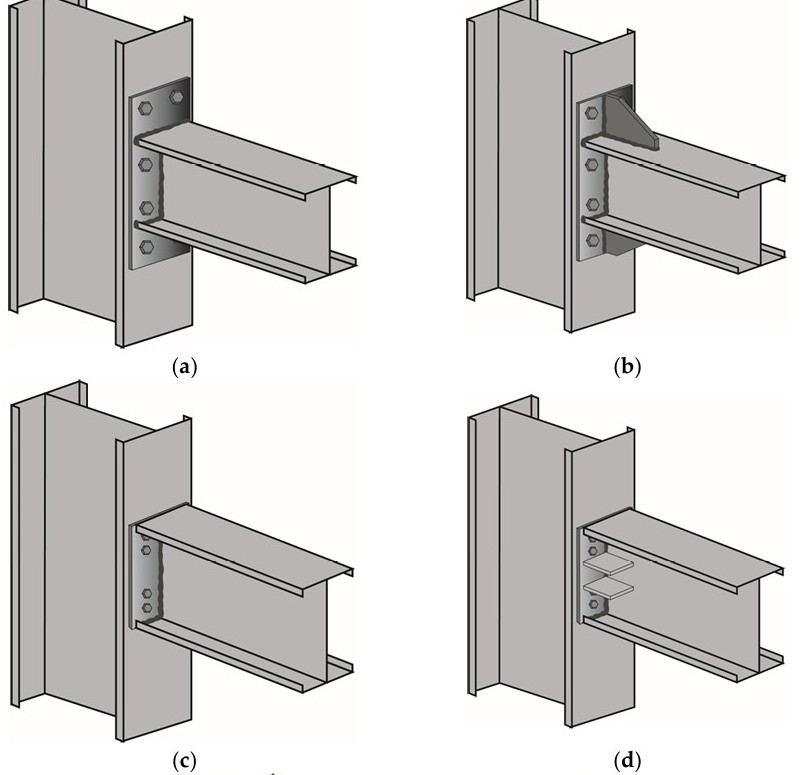
Supplied connection configurations from the collaborative structural study. Model representation is distinguished from test authorship. Publication · 10.3390/met13040753
Decision supported
Choose a suitable representation of stainless-steel joint stiffness and post-elastic behaviour.


Engineering record
Published collaborative research; referenced experimental work is credited to its source.
A beam-to-column connection influences frame stiffness, load transfer and rotational capacity. Stainless steel has a rounded nonlinear stress–strain response and substantial strain hardening, so a carbon-steel idealisation may obscure parts of the joint response.
The published study examines extended end-plate (EEP), flush end-plate (FEP) and top-and-seat angle cleat (TSAC) connections, combining a simplified analytical approach with nonlinear FE representation.
I am a co-author of the published paper with Rabee Shamass, Ida Mascolo, Gaetano Della Corte and Federico Guarracino. The article explicitly states equal contribution by all five authors.
This page describes the collaborative analytical and modelling work. Experimental geometry, material data and test response used as references are credited in the article; the tests are not presented as experiments personally performed by me. Related thesis files and unpublished extensions are not given the status of this published paper.
The analytical investigation considers the component method and a pseudo-plastic moment resistance formulation using post-elastic secant stiffness. The FE model represents nonlinear material behaviour, large deformation, contact and the interaction of joint components.

Scroll the table horizontally to inspect all columns.
| Aspect | Representation reported in the article |
|---|---|
| Geometry and loading | 1500 mm beam and column; monotonic vertical beam load 1470 mm from the column flange; out-of-plane deformation constrained. |
| Restraints | Fixed column base and restrained horizontal displacement at the column top in the loading plane. |
| Elements and mesh | S4R shell elements; mesh study over 2–40 mm, with 5 mm in high-stress regions and 20 mm elsewhere. |
| Connections and contact | Weld ties, Cartesian bolt elements, hard normal contact and tangential penalty friction coefficient 0.3. |
| Material response | Ramberg–Osgood-based stainless-steel description with reported measured properties. |
The article compares moment–rotation relationships and resistance estimates with credited experimental reference data. It also examines predicted mechanisms and the ability of a numerical representation to reproduce joint behaviour.
Initial stiffness, post-elastic resistance and rotational capacity are separate quantities. A model that represents one satisfactorily does not automatically establish the others. The comparison is used to interrogate the material idealisation and connection mechanisms within the tested configurations.
The published work argues for more suitable capacity models for stainless-steel joints. This portfolio does not turn that research conclusion into a claim that a design standard has been changed or that a general commercial improvement has been demonstrated.
Some Considerations on the Behaviour of Bolted Stainless-Steel Beam-to-Column Connections: A Simplified Analytical Approach. Metals 2023, 13, 753.
Read the open-access article · Full publication record
The scope is the connection arrangements, properties, restraint and loading assumptions reported in the study. It does not establish universal applicability, fatigue/seismic qualification or an approved design for a client’s structure.
Structural Analysis & FE Modelling applies mechanics and model interpretation to a defined engineering question.
Research supporting this project
2023 · Metals
Sina Sarfarazi; Rabee Shamass; Ida Mascolo; Gaetano Della Corte; Federico Guarracino
2022 · ce/papers
Sina Sarfarazi; Rabee Shamass; Gaetano Della Corte; Federico Guarracino
Continue exploring
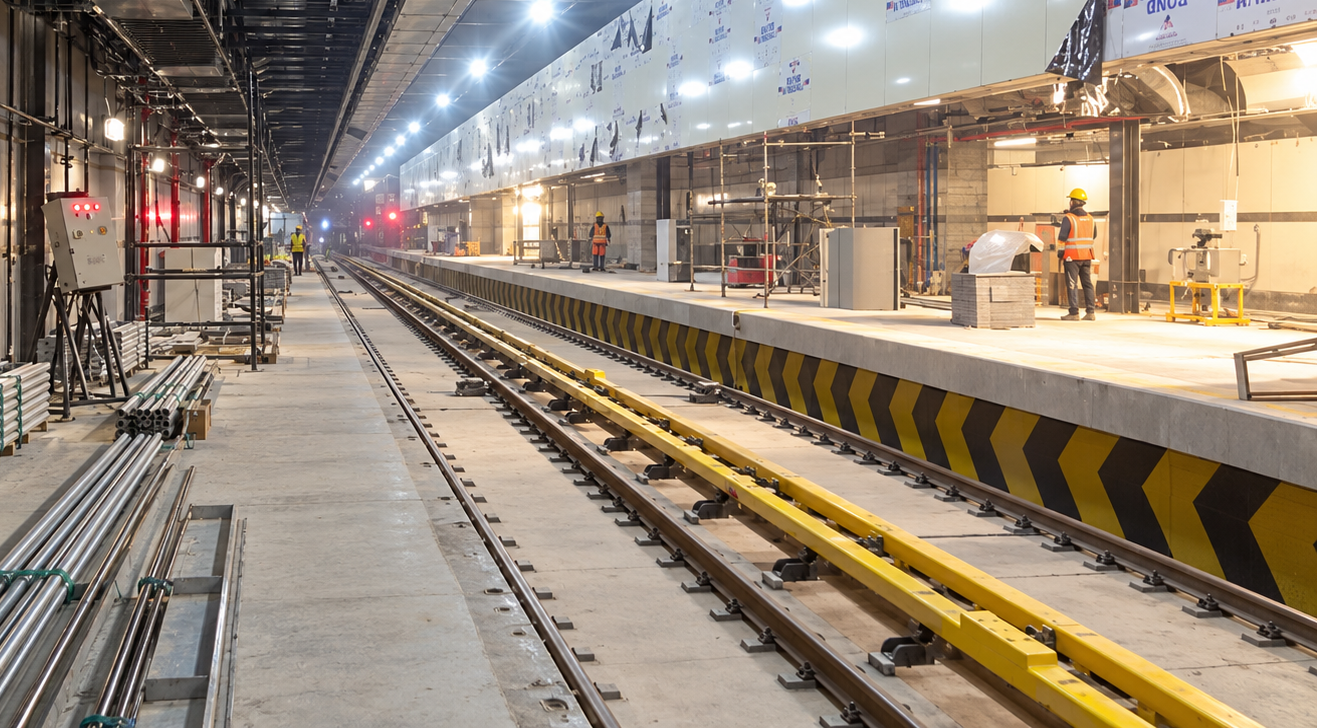
Structural supervision and multidisciplinary coordination during construction of the K2 and M2 metro stations in Mashhad, Iran.
Structural supervision · Construction coordination

Connect performance screening, candidate comparison and geometry output.
Surrogates · Inverse design
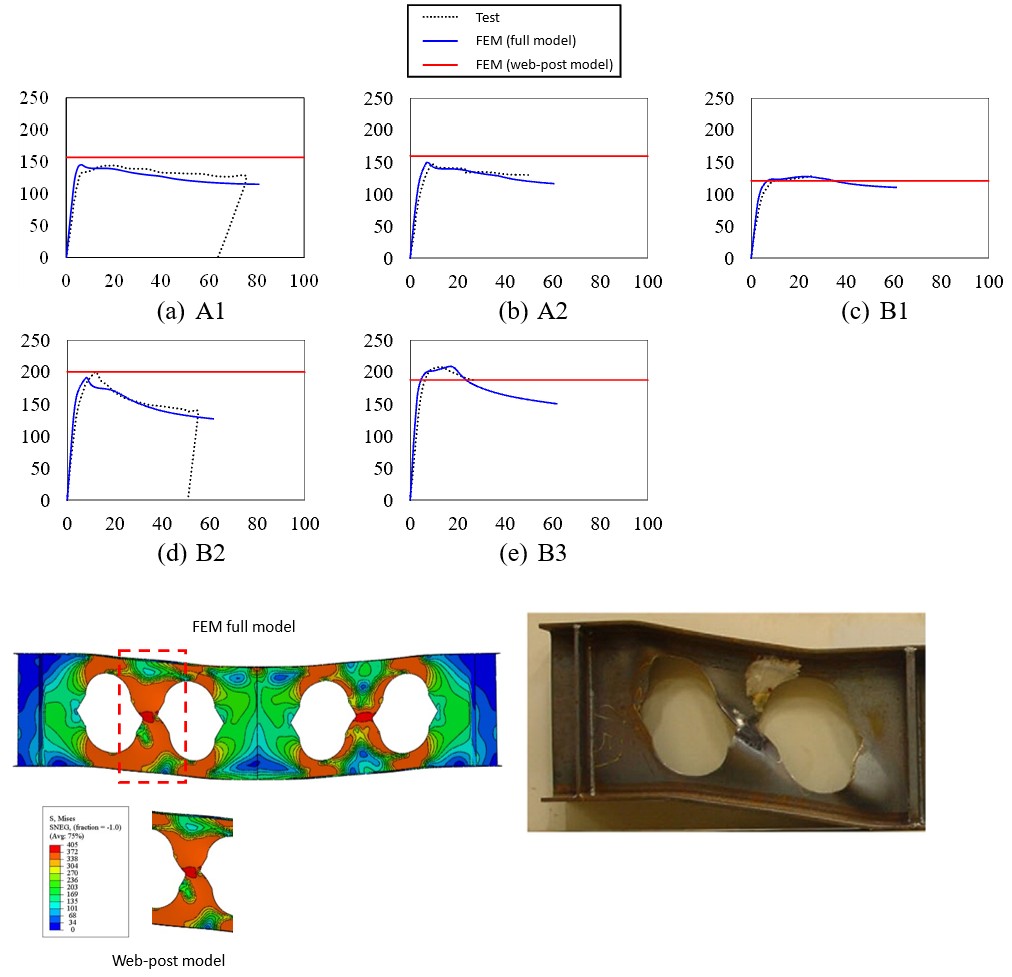
Search from a performance target towards possible parent sections.
Multi-output regression
Your next engineering question
An asset to verify. A response to understand.
A workflow to make repeatable.