Set the engineering case
Target resistance, span, opening layout and parent-section candidates

Published research / software
Connect performance screening, candidate comparison and geometry output.

Supplied cellular-beam design workflow: inputs, FE/surrogate evidence, inverse design and fabrication-oriented outputs. Publication · 10.1016/j.advengsoft.2026.104262
Engineering software / Streamlit
For steel design and computational engineering teams
Connect performance screening, candidate comparison and geometry output.
Connect performance screening, candidate comparison and geometry output.
Target resistance, span, opening layout and parent-section candidates
Ranked candidates, robustness checks, scenario metrics and CAD outputs
Shortlist cellular-beam designs with explicit feasibility checks.
Surrogates · Inverse design
Published software contribution, external FE database and numerical validation with false-feasible outcomes reported.
Research software. The external FE dataset is attributed to its creators; screening does not replace final design verification.
Public deployment has not been verified. The supplied interface and source establish the implementation shown.
Engineering record
External FE database and numerical validation; no commercial deployment or engineering certification claimed.
Cellular-beam design couples parent-section selection, opening geometry, structural resistance and fabrication constraints. Starting with an arbitrary geometry can create repeated forward checks. This research framework instead starts with a prescribed resistance target and retrieves admissible parent-section alternatives.
The inverse problem has multiple possible solutions. The output is a screened set of candidates and their comparison, rather than a single geometry asserted to be uniquely correct.
I am the first author of the supplied manuscript, with Felipe Piana Vendramell Ferreira, Rabee Shamass, Konstantinos Daniel Tsavdaridis, Ikram Abarkane and Musab Rabi. Manuscript, code files and validation tables document the research-software workflow.
The resistance surrogate uses an external database of 14,094 FE-derived beam cases. The database provenance is credited to the work of Degtyarev, Hicks, Ferreira and Tsavdaridis. These cases are not presented as FE simulations personally generated by me.
Status: published collaborative research in Advances in Engineering Software 221 (October 2026), 104262. Publisher record. Production deployment is not established.
A forward surrogate maps geometric, material and opening-layout variables to FE-derived resistance. Monotonic constraints encode selected relationships during training.
Search discrete parent sections against a prescribed target, fixed span and opening conditions. Apply geometric admissibility and the framework’s feasibility checks before ranking.
Evaluate controlled geometric perturbations and multi-objective rankings. Carbon indicators are scenario-based comparisons, not verified project savings.
The documented workflow includes CAD-compatible geometry generation and an interface for examining candidate outputs. This is downstream representation, not a fabrication approval.
The supplied feasibility table evaluates 6,243 candidate assessments across 459 scenarios. “Feasible” below refers to the table’s FE-labelled classification task and its chosen criteria.

Scroll the table horizontally to inspect all columns.
| Measure | Value | Interpretation |
|---|---|---|
| True positives / false positives | 3,029 / 249 | Predicted-feasible assessments classified feasible / infeasible by the FE label. |
| False negatives / true negatives | 157 / 2,808 | Predicted-infeasible assessments classified feasible / infeasible by the FE label. |
| Precision / recall | 0.924 / 0.951 | Classification metrics within this validation population. |
| False-feasible rate | 7.60% | 249 of 3,278 predicted-feasible assessments; not a claim about field failure probability. |
A separate near-target evaluation returned 878 retained candidates for 408 of the 459 scenarios, using a ±10% target band. Target consistency must be read with its denominator: it is not a structural safety certificate.
Scroll the table horizontally to inspect all columns.
| Measure | Result | Population / condition |
|---|---|---|
| Scenario return rate | 408 / 459 (88.89%) | Scenarios returning near-target candidates. |
| Returned-set FE target-band consistency | 89.07% | Retained candidate set. |
| Top-1 FE target-band consistency | 91.91% | Top-ranked returned candidates. |
| Median top-1 FE relative error | 2.48% | Reported median in the supplied summary table. |
Source: supplied feasibility and near-target validation tables associated with the research manuscript. Values are rounded for readability. Download the classification table (CSV).
The evaluation demonstrates a bounded candidate-retrieval and screening workflow. False-feasible cases remain material: surrogate screening does not replace independent verification of a retained design.
Results apply to the supplied FE-derived domain and the framework’s defined beam assumptions, including laterally restrained configurations. Domain transfer, connection behaviour, other loading conditions and fabrication acceptance require separate assessment.
Robustness perturbations and sustainability scenarios inform comparison within the tool. They do not establish delivered tolerances, certified resistance, real material savings or a complete project life-cycle assessment.
Engineering R&D connects calculation rules, model output and decision support. Structural Analysis & FE Modelling provides the underlying mechanics and verification context.
Research supporting this project
2026 · Advances in Engineering Software
Sina Sarfarazi; Felipe Piana Vendramell Ferreira; Rabee Shamass; Konstantinos Daniel Tsavdaridis; Ikram Abarkan; Musab Rabi
Continue exploring
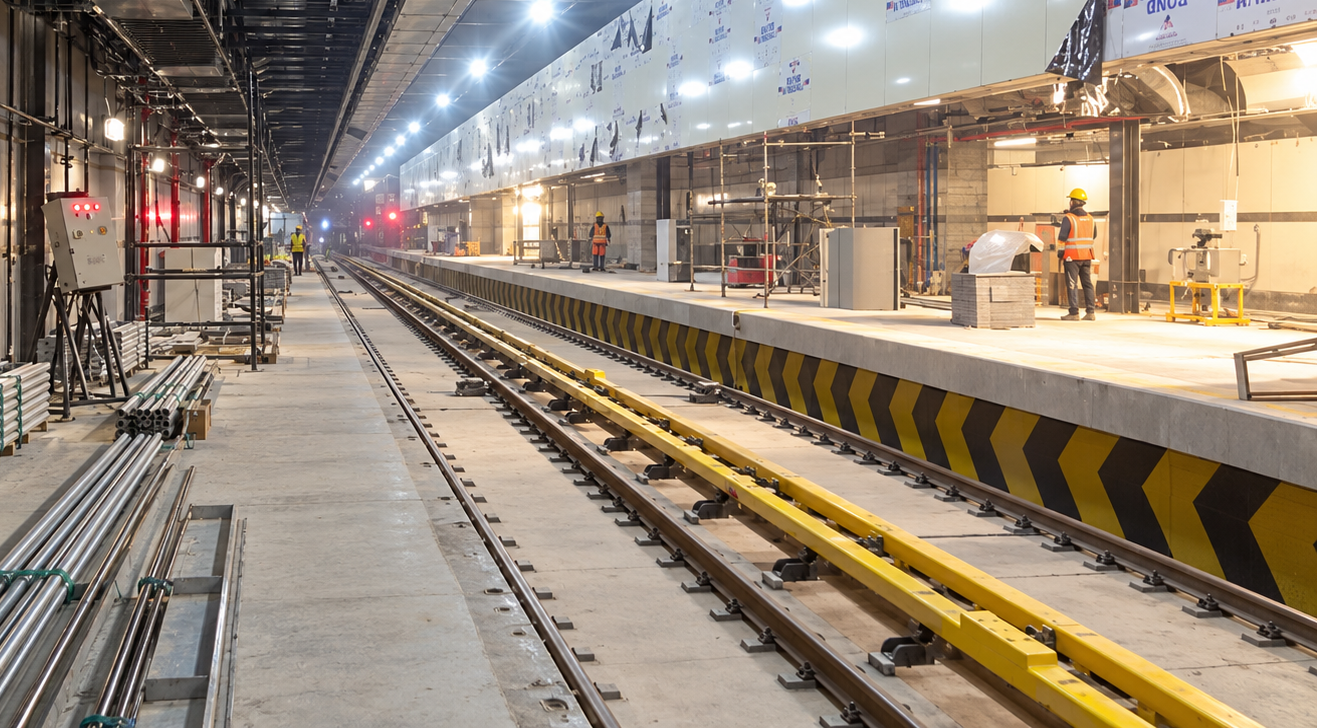
Structural supervision and multidisciplinary coordination during construction of the K2 and M2 metro stations in Mashhad, Iran.
Structural supervision · Construction coordination
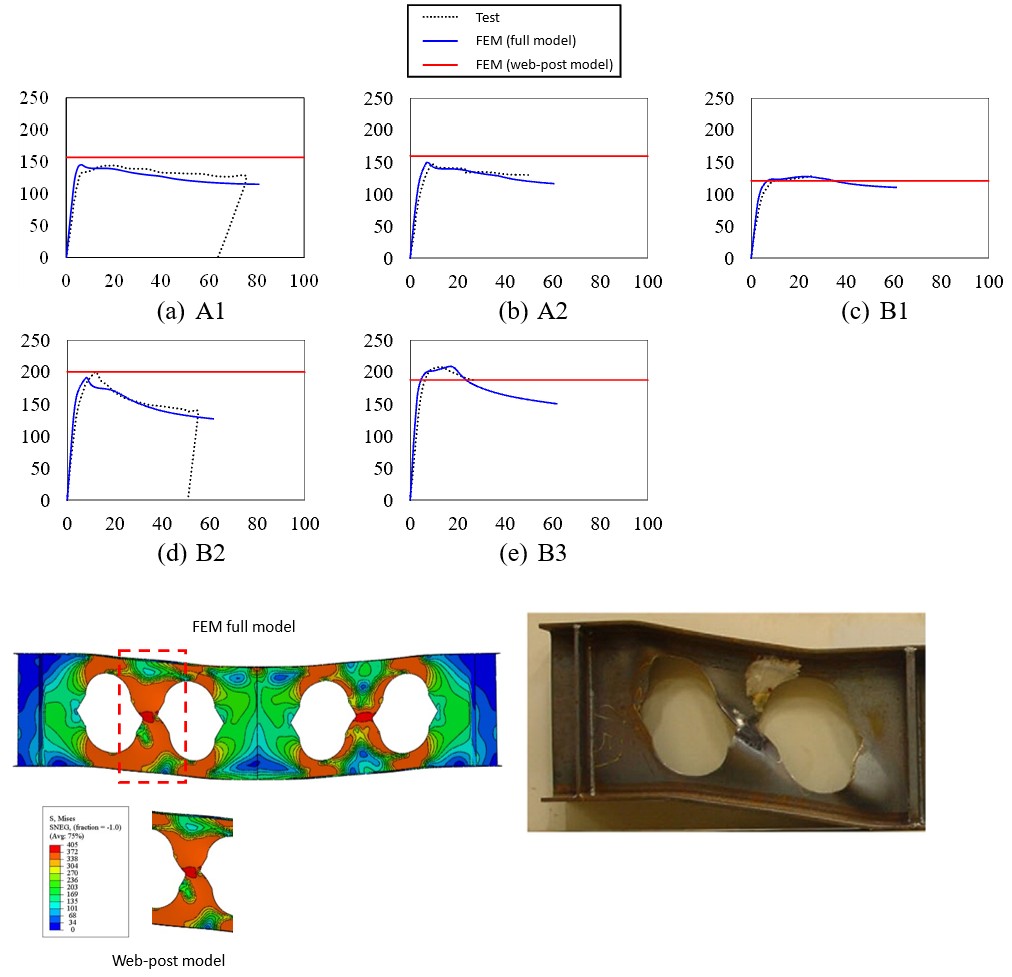
Search from a performance target towards possible parent sections.
Multi-output regression
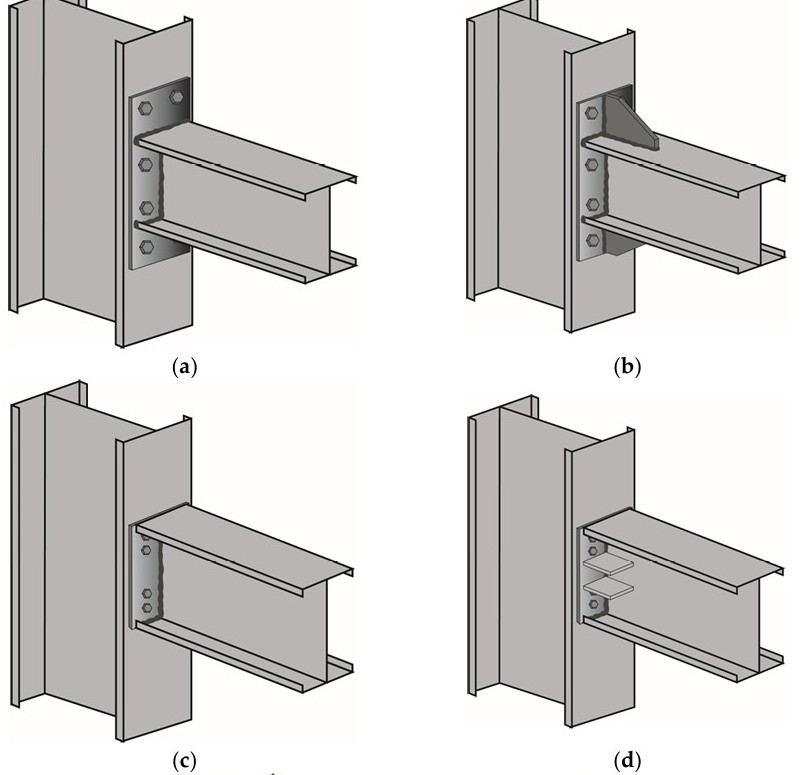
Explain bolted joint response through mechanics and nonlinear FE.
Abaqus · Analytical mechanics
Your next engineering question
An asset to verify. A response to understand.
A workflow to make repeatable.